2007-11-30

[Network] PON standards

Passive Optical Network (PON) Standards

There are two important gigabit line rate PON standards, the IEEE 802.3ah Ethernet in the First Mile standard and the ITU-T G.984 GPON standard.


IEEE 802.3ah GE-PON or EPON - Gigabit Ethernet PON

GE-PON, also called EPON, is deployed widely in Japan and provides for a symmetrical 1.0 Gbps data rate in both directions, upstream and downstream. It is the first gigabit PON technology to achieve high volume deployment.

One of the most important advantages of GE-PON is the use of native Ethernet transport protocols. Low-cost asynchronous Ethernet has been deployed in the extended data network for years and there are significant economies of scale associated with gigabit Ethernet components such as optical interfaces. The asynchronous nature of Ethernet enables Ethernet-based network equipment to be much lower cost than comparable clock-synchronous ATM or SONET-based equipment.

IEEE 802.3ah - Key Facts
  • Ratified by the IEEE in June of 2004
  • Combines Ethernet transport protocols with point to multipoint PON network topologies
  • Also called Ethernet in the First Mile or EFM
  • 1.0 Gbps symmetrical upstream and downstream bandwidth
  • Includes mechanisms for network Operations, Administration and Maintenance (OAM)
  • Supports Class of Service (CoS) operation for time-sensitive transport of data payloads such as video where video frames must be delivered in sequence and in time to prevent visible glitches
  • Supports TDM using circuit emulation services
  • Supports voice services with Voice over IP (VoIP)

ITU-T G.984 GPON - Gigabit PON

GPON has received a lot of attention since the ITU introduced the ITU-T G.984 recommendation in 2003. But the recommendations are still in flux with details still being updated. As a result, GPON is not yet widely deployed. GPON is based on the previous ITU BPON standard but has many similarities to GE-PON.

Introduced in 2003 as ITU-T G.984, GPON uses a new native Generic Encapsulation Method (GEM) transport layer that supports multiple "non-native" transport protocols including ATM, Ethernet, and TDM. The original intention was to broaden support and market acceptance by supporting multiple protocols, but the effect has been to add complexity to those systems not requiring additional protocol support. A key characteristic is the 2.5 Gbps downstream data rate and the 1.25 Gbps upstream data rate. GPON operates in a very similar fashion to GE-PON when supporting Ethernet as its primary transport protocol. But since Ethernet, gigabit Ethernet and 10Gb Ethernet do not support a 2.5 GHz clock rate, unlike GE-PON, GPON does not benefit from the availability of low-cost Ethernet optical components.

ITU-T G.984 - Key Facts
  • Recommendation from ITU-T in January of 2003, revisions in process
  • Uses Generic Encapsulation Method (GEM) protocol layer to support Ethernet, ATM and TDM over point to multipoint PON network topologies
  • 1.25 Gbps upstream and 2.5 Gbps downstream bandwidth
  • Includes mechanisms for network Operations, Administration and Maintenance (OAM)
  • Supports Class of Service (CoS) operation for time-sensitive transport of data payloads
  • Supports TDM using circuit emulation services or transport over GEM
  • Supports voice services with Voice over IP (VoIP)

GE-PON and GPON In the Market

Lacking the economies of scale and with the specifications still being updated, GPON deployment has lagged behind that of GE-PON. Nonetheless, with the backing of FSAN, the Full Service Access Networks organization, a group of worldwide carriers who play an important role in the ITU standards body, and the prospect simplifying protocol support to focus on Ethernet, GPON has garnered a great deal of interest in North America and other geographic regions seeking to adopt a gigabit PON standard for FTTH deployment.

More Standards Information

The GE-PON IEEE EFM and GPON ITU standards may be downloaded here:
- From PMC homepage

[Network] NGN 주요 장치

●NGN의 6개 영역에서 필요한 주요 장치
다음의 6개 영역에서 ATCA와 μTCA가 적용되어 있다.
(1) Network Service Control
(2) Operation
(3) Core Network
(4) Access Network
(5) Enterprise Network
(6) Home Network

[Network] Advanced TCA

Advanced TCA(telecom computing architecture)는 통신 사업자를 위한 컴퓨터의 물리적/논리적인 사양 규격이다. 국제표준 하드웨어를 이용하여 통신사업자의 서비스 개발 기간/비용 삭감을 가능하게 한다. 소형 시스템을 구성하는 μTCA규격도 정해져 있다.
ATCA규격의 Blade는 약 28cm×32cm의 사이즈로 규정되어 있다.

- PICMG Advanced TCA관련 규격


- ATCA규격에 의한 Chassis배선예
2~13의 slot에 ATCA Card를 접속한다.
양단(1,14slot)의 Switch Blade(SWB)에 Star형으로 배선된다.


- 오끼전기공업의 세션 보더 콘트롤러


MicroTCA builds on the strength of AdvancedTCA to deliver a standardized platform for smaller systems that need to meet lower-cost parameters. MicroTCA is built around the Advanced Mezzanine Card (AdvancedMC) modules originally developed for AdvancedTCA and other systems.
A key feature of MicroTCA is that it allows multiple packaging options. Unlike standard AdvancedTCA, it meets the 300mm equipment practice. It also supports flexible switching architectures like ATCA, and can be configured to support carrier-grade availability with full NEBS compliance.
This means packaging will be one of the biggest variables in MicroTCA, and there are a number of standard packaging options defined. These include Pico for very small systems, mainly with two or four AMC modules; an 8-inch cube for a fixed configuration with 12 AMCs; and a very flexible 19-inch-rack configuration that can be scaled from about 12 AMCs up to 192 AMCs.


- Typical μTCA System Chassis


There are 12 AMC modules connected by Gigabit Ethernet, PCI Express, or perhaps some other fabric; and there is also a fabric interface consisting of 21 differential pairs that connects everything together. An AC or 48V DC power module provides switched power to each slot, and a MicroTCA Carrier Hub (MCH) provides the shelf management and switching.


-Typical MicroTCA Carrier Hub

2007-11-29

[Network] NGN - General overview

A Next Generation Network is a packet-based network able to provide services including Telecommunication Services and able to make use if multiple broadband, QoS-enabled transport technologies and in which service-related functions are independent from underlying transport-related technologies. It offers unrestricted access by users to different service providers. It supports generalized mobility which will allow consistent and ubiquitous provision of services to users.

[Network] E-Mail

SNMP, POP3

- 2종류의 Protocol을 사용해서 메일을 송수신한다.
일반적으로 송신에 SMTP(TCP25)를, 수신에 POP3(110)을 사용한다.


- 2가지 Protocol을 나눠 사용하는 이유는 PC의 이용형태때문이다.
SMTP는 바로바로 메일을 전송하기 때문에 PC가 항상 켜져있어야 하지만,
POP3를 이용하면 메일을 읽을 필요가 있을 때(요구가 있을때)
메일 서버에 저장된 메일을 수신할 수 있게 된다.


- SMTP의 기본 동작


- POP3의 기본 동작
RFC1939에 규정된 POP3로 메일 수신할 때는 유저 인증 후 다른 동작이 실행된다.

2007-11-27

[Mobile] 일본 2.5GHz대역의 면허 신청 4개사의 사업계획

표. 2007.11.22. 컨퍼런스에서 명확해진 2.5GHz대역의 면허 신청 4개사의 사업계획


社名WillcomOpen wireless Network
Wireless Broadband 기획
Acca Wireless
採用規格차세대PHSMobile WiMAX
서비스
開始時期
시험:2009.4
상용:2009.10
2009年3月시험:2009.2
상용:2009年夏
2009年3月
計画
加入者数
約390万加入400~1700万加入約560万加入2009年:25万加入
2013年:500万加入
Area展開計画
(人口Coverage)
2011年度末:56.6%
2012年度末:90.6%
2008年度末:16.7%
2009年度末:49.9%
2011年度末:78.5%
2014年度末:91.6%
2012年度末:90%超2009年末:約30%
2010年末:約50%
2011年末:約50%
2012年末:約70%
料金ARPUで4000円以下1000円台~5000円台非公表4000円以下の定額制
設備投資額2015年度末까지
累計約2000億円
2014年度末까지
累計約2500億円
2013年度까지
累計1440億円
累計2000億円
収入非公表2014年度:1089億円2013年度:1440億円2009年:60億円
2013年:1500億円

 ワイヤレスブロードバンド企画

32.26%の株式を保有するKDDIを筆頭株主に,

米インテル キャピタルとJR東日本,京セラがそれぞれ17.65%,

大和証券グループ本社が9.8%,

三菱東京UFJ銀行が5%を出資する。

資本金は8億5000万円で,

社長にはKDDIの田中孝司・取締役執行役員常務が就任した(写真1)。


 総務省は2.5GHz帯周波数の免許割り当てを「第3世代携帯電話(3G)事業者とグループ会社は対象外」とする方針を打ち出し,既存の3G事業者とそのグループ会社による参入を3分の1未満の出資に制限している。KDDIの小野寺正代表取締役社長兼会長は以前から「3分の1未満の出資でも主導権を取って参入したい」と主張していたが,まさにそれを実現した格好だ。
「3Gとの連携は考えていない」 企画会社では,データ通信に特化した市場を狙っていく。ノート・パソコン向けを皮切りに,デジタル家電など組み込み端末向けへと順次拡大していく計画だ。「既存の3Gとは違った新たな市場の開拓を考えている。組み込み端末を主な対象としたデータ通信が中心の事業になり,3Gとの連携は考えていない」(ワイヤレスブロードバンド企画の田中社長)とする。KDDIは実証実験では3Gとの連携も対象としていたが,2.5GHz帯を3Gの補完で終わらせたくない総務省の方針をくんで戦略を変えたようだ。


 事業構想の説明では,

「通信インフラをMVNO(仮想移動体通信事業者)に積極的に貸し出して市場を拡大していく」,

「2008年4月にモバイルWiMAXの商用サービスを開始予定の米スプリント・ネクステルなどとの国際ローミングを実現する」,

「日本経済の発展,国際競争力の強化に貢献する」など,総務省に対するアピールが目立った。
 今後の増資額,企画会社の具体的な体制,想定する市場規模,サービス開始時期などは「免許の審査事項に関係する」として明言を避けた。

2007-11-26

[Mobile] 일본 전화요금 체계

[Network] Asterisk - The Open Source PBX


[Words] 당장 줍고 싶은 인생의 만원짜리들

1) 10분의 달콤한 늦잠
2)
연봉 인상을 내세운 이직 제안
3)
운동 후의 야식
4)
좋아하는 일보다 안정된 일 찾기
5)
원가를 낮추는 질 낮은 재료
6)
화나는 대로 생각나는 대로 내뱉는 말

- 야스다 요시오의 '만원짜리는 줍지 마라' -

2007-11-23

[Mobile] 4G용 주파수 확정(ITU-R)

국제 전기 통신 연합의 무선 통신 표준화 부문 'ITU-R'은 국제적으로 이용하는 IMT(3G/4G 이동통신 시스템)용의 새로운 주파수대역을 다음과 같이 결정했다.
- 3.4G~3.6GHz의 200MHz 폭
- 2.3G~2.4GHz의 100MHz 폭
- 698M~806MHz의 108MHz 폭
- 450M~470MHz의 20MHz 폭

[News] Microsoft Surface!


서피스는 넓은 터치 스크린을 얹은 테이블 모양의 제품이지만, 실제 터치 스크린이 없다. 대신 화면 밑에 내장된 5개의 적외선 카메라가 찍은 영상으로 손가락의 움직임을 실시간으로 분석한다. 블루투스(무선통신 기술의 하나) 기능이 지원되는 디지털카메라를 서피스 테이블 위에 얹어놓으면 카메라에 저장된 사진을 내려 받아 보여준다.

2007-11-22

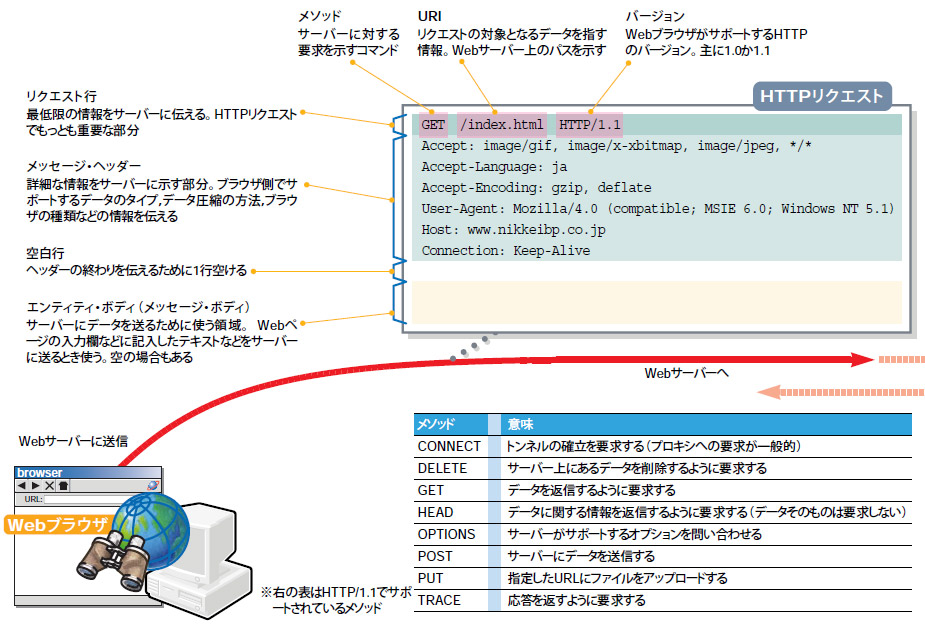
[Network] HTTP의 구조

- WEB Page 표시


- HTTP Request


- HTTP Response


- Web Server

[Network] IMS Guide

IMS Guide

Indtroduction (2004-03-24, Light Reading)

IMS is a label that has started springing up all over the telecom industry, whether on individual products, or as vendor systems platforms or interoperability programs. It’s the acronym for IP Multimedia Subsystem, and it is very, very important – a big vision of the future of telecommunications hangs on it. It’s also very, very complicated and pretty abstract.

This tutorial aims to resolve some of that unfortunate conjunction by providing a quick and easy guide to some questions that are frequently asked about IMS. In the report's initial form, answers to a number of basic questions are given, one per page. But the idea is that readers can ask further questions on the message board attached to this article. If you want to send a private message, please email us, and include "IMS Guide" in the subject field. Frequently posed questions will be answered by adding pages to this report.

For a basic understanding of IMS, here are the key starting points:

  • IMS started as a technology for 3G mobile networks (under the auspices of the 3rd Generation Partnership Project (3GPP)), but it is now spreading to next-generation wireline networks and is going to be a key to fixed/mobile convergence. It builds on the Session Initiation Protocol (SIP), which has emerged as the crucial technology for controlling communications in IP-based next-generation networks (NGNs).
  • IMS is about services and applications, enabling telcos, mobile operators, and other service providers to offer rich multimedia services across both next-generation packet-switched and (within obvious limits) traditional circuit-switched networks. It is standards-based and uses open interfaces and functional components that can be assembled flexibly into hardware and software systems to support real-time interactive services and applications.
  • IMS will have a major impact on the telecom industry – including telcos, mobile operators, service providers, vendors, and others – because it will lead to new business models and opportunities, and (hopefully) lower costs through standards-based procurement. It simultaneously lets network owners derive added value from their networks, while opening these networks to third parties (including enterprise customers) to develop and offer enhanced and tailored services and applications of their own. The full exploitation of mass-market broadband will depend on it.
  • The basic set of standards for IMS implementation were released in 2004, and the first implementations are in hand or planned. Both the International Telecommunication Union (ITU) and the European Telecommunications Standards Institute (ETSI) are heavily involved, and IMS standards are still developing to fill in the inevitable gaps and to add new capabilities. However, IMS is still untested in real-life major carrier networks, and its widescale implementation is some years away.

Support for IMS even at this early stage in its development seems to be fairly hard-nosed, if the results of a poll taken during the Light Reading Webinar on which some of this report is based – IMS: A Blueprint for Fixed-Mobile Convergence – are typical:

  • Just over 40% of respondents thought that the most important catalyst for IMS deployment was the service providers’ need to create a more flexible environment for the deployment of applications.
  • 18% thought it was service providers’ need to create a converged fixed and mobile network.
  • 17% thought it was service providers’ need to deploy blended or combinational multimedia applications.

In other words, a large majority in favor of pragmatic flexibility, rather than any fancy and/or more futuristic possibilities.

Here's a hyperlinked list of the questions and answers in this report:

[Mobile] 일본 최신 Mobile통신카드 정리

写真1●KDDIの「W04K」
写真2●NTTドコモの「A2502 HIGH-SPEED」
写真3●イー・モバイルの「D01HW」
写真1●KDDIの「W04K」写真2●NTTドコモの「A2502 HIGH-SPEED」写真3●E-Mobileの「D01HW」

表1● 주요 통신 카드의 주요 스펙
製品名 W04K FOMA A2502 HIGH-SPEED D01HW
提供事業者 KDDI NTTドコモ イー・モバイル
メーカー 京セラ 韓国のAnyDATAnet 中国のファーウェイ・テクノロジーズ
発売時期 2007年11月予定 2007年10月 2007年6月
形状(インタフェース) CFカード USBドングル型(USB 2.0) USBドングル型(USB 2.0)
通信形式(理論上の最高通信速度) EV-DO Rev.A(下り3.1Mbps,上り1.8Mbps)/CDMA 1X WIN(下り2.4Mbps,上り144kbps/)/CDMA 1X(下り144kbps,上り64kbps) HSDPA(下り3.6Mbps,上り384kbps)/W-CDMA(上り下りとも384kbps) HSDPA(下り3.6Mbps,上り384kbps)
PC定額 一部対応 条件付き対応 対応
Data通信機能以外の搭載機能 GPS/SMS/接続先限定 SMS 없음
GPS:全地球測位システム  SMS:short message service  HSDPA:high speed downlink packet access  bps:ビット/秒


表2● 3사의 데이터 통신 카드의 파일 전송 실측 속도
1MB의 파일을 다운로드/업로드를 4회 평균치로 한 실측
事業者名 KDDI NTTドコモ イー・モバイル
端末名 W04K FOMA A2502 HIGH-SPEED D01HW
新宿西口 昼間 下り 513.14kbps 1224.5kbps 679.96kbps
上り 72.38kビット/秒 317.62kビット/秒 257.68kビット/秒
夜間 下り 1039.3kビット/秒 1738.46kビット/秒 1320.38kビット/秒
上り 69.96kビット/秒 313kビット/秒 326.58kビット/秒
昼夜平均 下り 776.52kビット/秒 1481.48kビット/秒 1000.17kビット/秒
上り 71.17kビット/秒 315.31kビット/秒 292.13kビット/秒
東京ミッドタウン 昼間 下り 318.56kビット/秒 991.24kビット/秒 959.06kビット/秒
上り 185.86kビット/秒 310.52kビット/秒 67.84kビット/秒
夜間 下り 140.88kビット/秒 1453.28kビット/秒 997.88kビット/秒
上り 104.88kビット/秒 289.74kビット/秒 327.1kビット/秒
昼夜平均 下り 229.72kビット/秒 1222.26kビット/秒 978.47kビット/秒
上り 145.37kビット/秒 200.13kビット/秒 197.47kビット/秒
東京駅丸の内口 昼間 下り 707.1kビット/秒 1930.36kビット/秒 1305kビット/秒
上り 412.54kビット/秒 293.56kビット/秒 308.32kビット/秒
夜間 下り 1579.34kビット/秒 1746kビット/秒 1683.14kビット/秒
上り 666.22kビット/秒 298.54kビット/秒 325.08kビット/秒
昼夜平均 下り 1143.22kビット/秒 1838.43kビット/秒 1494.07kビット/秒
上り 539.38kビット/秒 296.05kビット/秒 316.7kビット/秒


[News] 일본 Fiber 1분기 단위 대여 논의

- PON1분기 단위의 대여


SoftbankBB Telecom, KDDI, E-Access, Acca networks등
'FTTH는 NTT동서의 독점경향이 높아지고 있다. 1분기 단위로 접속료를 설정하여 다른 사업자도 NTT동서와 동등한 Cost로 서비스를 제공할 수 있게 되길 바란다'

NTT동서 지역 회사
'PON의 1분기 단위 대여로 설비를 공유하면 서비스 품질 확보와 새로운 서비스 제공에 지장이 생긴다. 시험을 했다고는 하지만, 동적인 대역폭 변경이나 서로 다른 사업자의 Service Policy를 공유하는 Switch등에서 제어하기는 힘들다. '

전력계 사업자와 CATV사업자
'PON의 1분기 단위 대여는 서비스 요금의 저하는 기대할 수 있으나, 오히려 NTT동서의 Fiber이용율이 높아져 NTT독점 회귀를 초래한다. 설비경쟁을 유도한 총무성의 정책과도 반대되는 것이며, 전력계 사업자와 CATV사업자의 시장 퇴출이 우려된다'

총무성
NGN의 상용서비스가 시작되는 2008년 3월까지 정책을 결정해야 하나, 규제의 대상이 되는 제1종 지정 전기 통신 설비의 지정 범위와 상호 접속료 등의 검토가 우선시되어 충분한 의견수렴이 힘들 수도 있다.

[Network] IPv6구조


2007-11-21

[Mobile] 구글의 이동통신 사업 진출(?)

http://www.veracious.info/406

A Spokeperson of Google:
Our goal is to make sure that American consumers have more choices in an open and competitive wireless world. We have already made great progress in achieving this outcome and expect more progress in the future. FCC rules require us to reveal our plans by December 3, and we fully intend to do so. In the meantime, we are making all the necessary preparations to become an applicant to bid in the auction.

[Mobile] 모바일 인터넷 요금제 (한국)

KT Wibro(Wibro) - VAT 별도

슬림: 기본료 10,000원 / 기본 데이터 500MB / 추가 MB당 50원
베이직: 기본료 20,000원 / 기본 데이터 2GB / 추가 MB당 25원
스페셜: 기본료 30,000원 / 기본 데이터 4GB / 추가 MB당 10원
프리미엄: 기본료 40,000원 / 기본 데이터 6GB / 추가 MB당 7원
실속선언(프로모션): 기본료 10,000원 / 기본 데이터 1GB / 추가 MB당 25원
자유선언(프로모션): 기본료 19,800원 / 무제한

# 프로모션 요금제는 2007년 12월 31일까지 가입, 요금제는 2008년 3월 31일까지

SKT T Login(HSDPA) - VAT 별도

레귤러: 기본료 29,900원 / 기본 데이터 2GB / 추가 MB당 184원
프리미엄: 기본료 45,000원 / 기본 데이터 4GB / 추가 MB당 123원
레귤러(프로모션): 기본료 29,900원 / 기본 데이터 4GB / 추가 MB당 184원
프리미엄(프로모션): 기본료 45,000원 / 기본 데이터 6GB / 추가 MB당 123원

# 현재 프로모션 종료(?)

SKT T Login(Wibro) - VAT 별도

미니: 기본료 10,000원 / 기본 데이터 없음 / 추가 MB당 58원
슬림: 기본료 20,000원 / 기본 데이터 450MB / 추가 MB당 48원
레귤러: 기본료 26,000원 / 기본 데이터 870MB / 추가 MB당 34원
프리미엄: 기본료 33,000원 / 기본 데이터 2.4GB / 추가 MB당 18원
프리(프로모션): 기본료 16,000원 / 무제한

# 프로모션 요금제는 2007년 12월 31일까지 가입, 요금제는 2008년 3월 31일까지

KTF iPlug(HSDPA) - VAT 별도

기본: 기본료 7,500원 / 기본 데이터 없음 / 추가 MB당 2,600원
베이직: 기본료 29,500원 / 기본 데이터 1GB / 추가 MB당 156원
스페셜: 기본료 44,500원 / 기본 데이터 2GB / 추가 MB당 104원
베이직(프로모션): 기본료 29,500원 / 기본 데이터 5GB / 추가 MB당 156원
스페셜(프로모션): 기본료 44,500원 / 기본 데이터 7GB / 추가 MB당 104원

# 프로모션 요금제는 2007년 12월 31일까지 가입, 요금제는 2008년 3월 31일까지

[News] 초고속 인터넷 보급률 (정보통신부)

정보통신부가 2007년 11월21일 발표한 10월말 가구당 초고속 인터넷 보급률에 따르면 서울을 비롯한 수도권 지역의 가구당 초고속 인터넷 보급률은 100%를 넘는 것으로 나타났다.

세부적으로는 서울, 인천, 경기 등 수도권 지역의 가구당 초고속 인터넷 보급률은 각각 107.7%, 103.2%, 103.2%로 모두 100%를 웃돌았다.

하지만 전남지역의 경우 가구당 초고속 인터넷 보급률이 60.4%에 불과한 것으로 나타났다. 전남지역이 비록 섬이 많은 지역이라는 점을 고려해도 서울과 격차가 무려 50%에 육박하는 것.

강원(79.0%), 충남(78.8%), 전북(73.9%), 경북(71.5%), 경남(79.9%0 등도 모두 70%대로 서울의 보급률과 비교했을 때 그 격차가 40% 수준이다. 이밖에 제주(82.3%), 충북(82.4%), 대구(88.3%), 부산(86.3%) 등의 가구당 초고속 인터넷 보급률은 80% 정도를 기록했다.

[News] Ovum RHK’s service provider capital spending

3Q07 highlights for North American network operators:

Wireline revenues = $43.8 billion, up 0.5% versus 3Q06
Wireline capex = $7.4 billion, up 7.4% versus 3Q06
Mobile revenues = $37.9 billion, up 9.6% versus 3Q06
Mobile capex = $4.7 billion, down 18.2% versus 3Q06

--- OVUM

2007-11-20

Who's amung us

Want to know who's on your site and where they came from, in real time?
Then give us 30 seconds and we can answer that question for you! Just take the code on the right and insert it into every page on your site.

counter

[Network] SMTP Submission port 587

일본의 스팸메일 대책으로 「Outbound Port 25 Blocking」(OBP25B)가 있다.

OBP25B는 ISP외부에 있는 Mail server에 접속하는 SMTP의 25번 포트를 차단하는 것.
이를 회피하기 위해서는 25번 대신에 Submission port인 587을 사용하며 인증기능 선택이 필수


2007-11-19

[News] Google Goes DIY With 10 GigE

Google has built and deployed its own 10-Gbit/s Ethernet switches -- a move that could have implications for the systems, chip, and optical transceiver markets.

"This decision by Google, while small in terms of units purchased, is enormous in terms of the disruptive impact it should have on 10-GigE switching equipment providers and their component supply chains," he writes. Google took the same DIY approach with servers a few years ago. In this case, its work has implications for switch vendors like Force10 Networks Inc. and Woven Systems Inc. , since Google not only couldn't find what it needed, but also built its boxes from off-the-shelf chips.

Through conversations with multiple carrier, equipment, and component industry sources, we have confirmed that Google has designed, built, and deployed homebrewed 10-Gbit/s Ethernet switches for providing server interconnect within their data centers. This is very similar to Google's efforts to build its own server computers. Google realized that, because its computing needs were very specific, it could design and build computers that were cheaper and lower power than off-the-shelf alternatives.

It now appears that the process Google trailblazed in the server computing market will repeat itself in the enterprise switching market. Given the relative dearth of low-cost 10-GigE switching solutions, it isn't surprising to see Google revisit this approach.

2007-11-16

[News] Nortel Takes 40-Gig to Verizon

Nortel Takes 40-Gig to Verizon
NOVEMBER 15, 2007

Nortel Networks Ltd. (NYSE/Toronto: NT - message board) cracked open the Molson this morning as official word finally got out that it beat Ciena, Alcatel-Lucent, and others to become a major part of Verizon Business 's ultra long-haul network in Europe. (See Nortel Wins Verizon Deal.)

Nortel says the network is based on its Optical Multiservice Edge (OME) 6500 converged optical platform, and will provide 10-Gbit/s and 40-Gbit/s connectivity to meet growing bandwidth requirements being driven by video and advanced business services.

"This is a fantastic win for us," says Philippe Morin, president of Nortel's Metro Ethernet Networks. "Verizon made a vote of confidence on our 10-gig and 40-gig technology."

Morin points to the OME 6500's ability to serve both 10-Gbit/s and 40-Gbit/s links, which will allow Verizon to deploy the equipment and choose between 10-Gig or 40-Gig connections depending on bandwidth needs.

"The beauty of our offering is that it's on the same link budget. If they want to start at 10-gig and dial it up to 40-gig, they can," Morin says.

Morin says Nortel's technology will also offer "significant cost savings" to Verizon by enabling the carrier to extend 40-gig services without requiring dispersion compensation modules.

Michael Bauer, Director of Core Planning and Engineering for Verizon Business in Europe, says "there are significant differences in the network cost structure." He points to savings from being able to cut down on the incremental cost of adding 10-gig circuits across the current network topology, as well as the ability to reduce the number of regeneration sites by using the latest ULH technology.

Bauer says the ability to potentially upgrade to 100-gig services also played into the decision. "Having a credible story for 40-gig and then onwards to 100-gig has been an important factor," he says.

Morin says the Nortel technology will allow Verizon to "go from 10-gig to 40-gig and 40-gig to 100-gig on the same sort of route. What we're using at 40-gig we can also use for 100-gig."

Finally, Bauer says that part of the decision comes from the fact that the OME 6500 is already in use in some of Verizon's metro markets in Europe. "We have been using it in metro space. Basically the box is known to the local operations staff and it is simplifying certain activities in terms of operation system," he says.

The news comes as a follow-up to an announcement Verizon made in September, in which the service provider said it would upgrade 20 percent of its European optical network with ultra-long-haul technology by the end of the year. (See VZ Goes Ultra Long-Haul.)

But Verizon didn't name the chosen vendor at that time, saying it could be one of its current three suppliers -- Alcatel-Lucent (NYSE: ALU - message board), Nokia Siemens Networks , and Ciena Corp. (Nasdaq: CIEN - message board) -- or another vendor.

That Nortel won over incumbent suppliers in the network could be significant, particularly as optical vendors jockey for a larger piece of Verizon's business. That's because Verizon and Verizon Business have RFPs out for converged optical + Ethernet platforms to be used in their networks. (See Verizon Preps God Box RFP and Verizon Biz Nears 'God Box' Choice.)

Because of opportunities like those, Nortel has transformed the OME 6500 from a typical transport device to a converged box. In June, Nortel announced that it was adding integrated reconfigurable optical add/drop multiplexing (ROADM) and Ethernet access capabilities to the OME 6500. (See Nortel's Noisy With Optical Opportunity.)

"From our point of view, we're responding to these opportunities, not just with Verizon. As the demand for Ethernet services or packet services increases, our converged platform fits really nicely into that sweet spot," Morin says.

— Ryan Lawler, Reporter, Light Reading

[News] Hunan Deploys NSN DSLAMs

A new deal between Nokia Siemens Networks and Hunan Telecom sees Nokia Siemens Networks increasing DSL deployment as it expands its cooperation with Hunan Telecom, a subsidiary of China Telecom.

Under the contract, Nokia Siemens Networks will provide its DSL access solutions to an additional two cities in Hunan province, in central China. This will increase the reach of Nokia Siemens Networks-supplied DSL access to over one million end users in nine cities throughout Hunan.


2007-11-15

[Network] GMPLS

1. 개요

전송속도를 증가시키는 기존 방안 2가지로써, ① 전송량을 증가시키는 방법인 DWDM
과 ② 전송절차를 간소화시키는 방법인 MPLS 를 통합하여, 확장 일반화시킨 방식
을 GMPLS 라고 한다.


2. 특징

ㅇ GMPLS는 IP 패킷 방식이 아닌 광파장분할망(파장분할다중화), TDM망 등 이종 전송망
의 전송 단위를 일반화된 레이블로 해석하여,
- RSVP-TE 등의 GMPLS 프로토콜에 의해 전송 트래픽을 제어하고,
- 코어(Core)에서 엣지(Edge)까지 계층적인 GMPLS-LSP 중첩 체계를 구성하여,
- 일관되고 확장성 있는 전송 및 제어 체계를 이루려 하는 것이다.

ㅇ OSI-RM 계층모델 상의 1,2,3 계층이 함께 존재함에 따라 기존의 계층 구분이 모호

ㅇ 일반화된 기술방안 임에 따라, 다른 여러 라우팅 프로토콜, 트래픽 엔지니어링,
시그널링 프로토콜 등의 표준들과 밀접한 관련을 맺고 표준화되고 있음

ㅇ 광 전송분야에서 전송장치의 경우 한번 설치하면 특별한 문제가 없는 한 초기 설치
상황이 지속되므로 광과 관련된 파라미터를 규정할 필요성이 거의 없었다. 하지만,
시그널링에 따라 광 네트워크를 On Demand 방식으로 새로이 구성하여야 하는 GMPLS
에서는 광 특성을 파라미터화 하여야 한다
출처 www.ktword.co.kr/

[News] Light Reading's Top Ten Private Companies


Table 1: Light Reading's Top Ten Private Companies

PositionName Previous Ranking
1BroadSoft4
2CortinaNew
3Force101
4Cedar PointNew
5RGBNew
6UbiquiSysNew
7PacketFrontNew
8picoChipNew
9IneoQuestNew
102Wire7
Source: The pickled brains of the Light Reading editorial staff


2007-11-13

My Boy

[Mobile] Android Featured Videos


Sergey Brin and Steve Horowitz discuss the availability of the SDK, that it will be open source in the future, and demo some applications.

구글은 미국 현지 시간 11월 12일 휴대전화 플랫폼인 Android의 SDK Download를 공개
SDK는 Open Source Package로 Winows, Linus, Mac OS에서 이용 가능

[Mobile] Orange Builds on FMC Base

- Fixed and Mobile Convergence
UMA(Unlicensed Mobile Access) Based Service in France, hte U.K., and Poland

Orange has had the most success with its Unik service, in terms of subscriber numbers, of any European operator offering the UMA-based dualmode GSM/WiFi services, since it first launched the service in October 2006.

- 3분기에 50%이상의 WiFi/GSM handsets를 판매 (현재까지 총 468,000대 판매)
(6월까지는 30만대)

"The dualmode solution makes sense for Orange, BT Group plc , and T-Mobile International AG because they have a huge installed base of hotspots," says ABI's Carlaw.

- France Telecom은 Femtocell에 대한 RFP준비중
But femtocells are at an early stage of development, with operators just preparing for trials, and the earliest commercial launches are not expected until the middle of next year.

2007-11-12

[News] 소프트뱅크 2007년 중간결산

소프트뱅크는 11월 16일 중간결산(2007.4~9) 발표.
- 매출 : 전년대비 21.8%증가 (1조3647억4500만엔)
- 영업이익 : 49%증가 (1677억4600만엔)
- 경상이익 : 77.3%증가 (1111억6500만엔)

그중의 반이상이 휴대전화 사업에서. 계약자 순증 5월부터 6개월 연속 TOP.

≪移動体通信事業の当中間期業績サマリー≫
・売上高 814,509 百万円(前年同期比39.4%増加)
・営業利益 94,219 百万円(前年同期比66.4%増加)

화이트플랜 900만건, W화이트는 270만건 돌파

≪Broadband Infra事業の当中間期業績サマリー≫
・売上高 129,819 百万円(前年同期比0.6%増加)
・営業利益 18,986 百万円(前年同期比62.7%増加)
・「Yahoo! BB ADSL」の累積接続回線数、504 万2,000 回線(2007.9月末時点)

- 2007년10월말현재 (MNP이용현황)
NTT Docomo : 52,980,800(-70,500)
KDDI : 29,359,900 (+54,700)
SBM : 17,211,100 (+15,700)

Upside Down~

[News] 한국 인터넷 전화 가입 현황

정보통신정책연구원(www.kisdi.re.kr) 공정경쟁정책연구실 함창용 선임연구위원 등은 지난해 말까지 우리나라 인터넷전화 가입자가 88만명, 매출액은 약 1179억원에 이른다는 보고서를 발표했다. 국내 인터넷전화 가입자 수치와 매출에 대해 공신력 있는 조사는 이번이 처음이다.

이 자료에 따르면 네이트나 네이버 같은 포털 사업자들이 제공하는 소프트폰(PC에 다운로드해 사용하는 통신 소프트웨어) 가입자가 070의 경우 1만4650명이고, 발신용 가입자는 160만1048명인 것으로 조사됐다. 사업자별로는 기간통신사업자가 6만8662명이었고, 삼성네트웍스나 SK텔링크 같은 별정통신 사업자가 81만1935명이었다.

88만명은 상당히 적은 숫자다. 지난 10월 22일 정보통신부가 밝힌 2007년 9월 '유무선통신서비스 가입자 현황'에 따르면 우리나라 시내전화 가입자는 2330만7384명이었다. 인터넷전화 가입자는 시내전화 가입자의 3%에도 못미치는 미미한 숫자인 셈이다. 인터넷전화 시장이 가장 활성화된 일본의 경우 2006년말 기준으로 1500만명에 근접한 가입자를 확보했다는 것과 비교하면 국내 인터넷전화 시장은 걸음마 단계에 불과하다는 것을 알 수 있다.

[News] Japan's IT Background

Japan’s information and communications market continued to evolve through expanding access to broadband, mainly via fiber-optic connections and services. A key result was the further proliferation of search engine-driven portal services, online video services and consumer-generated media, such as social-networking services and blogs. In addition, society became less layered, or "flatter," in terms of the speed of accessing and distributing information.

The ways in which companies and consumers interact became more varied, and ongoing progress in information and communication technology resulted in dramatic changes in lifestyles and corporate business models.

At the same time, the global information and communications industry continued to evolve in terms of its competitive environment. Mergers and acquisitions mainly among Internet-related companies, for example, led to further consolidation in the United States and Europe.

- From Lightreadiing.com

2007-11-09

프레젠테이션 영어 표현 모음

프레젠테이션 영어 표현 모음

사회자에 대한 예의(Expressing Thanks to a Chairperson)

Thank you.(very much)

Mr./Ms./Chairperson

Mr. Chairman

Madam Chairwoman

Mr. Thomas

David

For your

Kind introduction

Gracious introduction

Introduction

서두의 인사(Greeting and Signaling the Start)

Good morning

Good afternoon

Good evening

Ladies and gentlemen

Gentlemen

Everybody

Everyone

도입부(Introduction)

I’d like to introduce myself

Let me introduce myself

I’m Hiroshi Tanaka

My name is Bill Smith

(and)I’m from /with XYZ Co., LTD

Of XYZ Co., Ltd.

환영의 (Welcome)

I’m honored

I’m pleased

To be here

To give this presentation

To have opportunity to speak with you

To day

To night

Thank you

For coming here

For attending the meeting

This morning

I’d like to welcome

Everyone

You all

This evening

배경설명(Setting the Scene)

To be concise

To put it briefly

To put it simply

In short

In a sentence

In a nutshell

Sales and profits are down

프리젠테이션 목적(Expressing purpose)

I’m here today

My purpose today is

Today, I want

My objective tonight is

My main aim this morning is

My goal this afternoon is

To help you get started


로드 (Road Map)

First(ly)

To begin with

To start with

Initially

I’d like to look at past performance.

I want to analyze current sales.

I’m going to present some options.

I shall be recommending a new strategy.

Second(ly)

Then

Next

Third(ly)

After this(that)

Finally

Last(ly)

주제로 들어감(Introducing Topics)

(To begin)

(Now)

(Next)

(Finally)

I’d like to

I want to

I’m going to

I shall

Review

Discuss

Analyze

Present

This year’s sales.

The data

I shall be

I’m going to be

Considering

Looking at

Let me begin by

Let me move on by

I’d like to go on by

Going over

Recommending possible solution

의견 발표(Expressing opinions)

We believe

We think

It is our view

My opinion is

I would say

It seems to us

We feel

We tend to feel

It is considered opinion

(that)

Your prices are too high.

발표 진행, 되돌아 보기(Moving On and Looking back)

Let’s now move on to

I(now)want to go on to

I’d(now)like to go on to

This brings me to

This brings us up to

The financial aspects of the problem.

The losses were due to the strike

But I shall come to this later.

Let’s look back for a moment to

Let’s go back to

I’d like to return to

My first diagram

As I said before

As stated before

As stated previously

The situation is serious.


This model

삭제와 승인(Elimination Alternatives)

Disapproval

We rule out

We have decided against

We reject

Options A

Because of the marginal

Saving it would give us.

Approval

We accept

We have chosen

We have selected

We have decided to adopt

Options B

Because of the clear benefits

It would give us.

권유(Making Recommendations)

We recommend

We would recommend

We urge

An increase in

This year’s dividend

We think you should

You ought to

It is recommended you

Increase

주제이외의 이야기(Digressing)

Let me digress here

Let me digress here

For a moments.

Briefly.

I’d just like to mention in passing

That demand is rising in other areas.

In passing an another matter

One could say it could

be said

Let me get back to

Let me return to

My main point.

What I was saying.

판단의 근거(Justifying Decisions)

Because of

Owing to

Since there is

As a result of

Due to

A rise in demand

We have increased output

Demand is up

For this reason

We have increased output

We have increased output

The reason for this is

A rise in demand.

We have increase output

Because of

비쥬얼의 선택(Choosing Visuals)

I’d like you to look at

Please look at

Have a look at

Let me show you

This diagram

This graph

This bar chart

This pie chart

This matrix

This table

This figure

This map

This model

You can see..

You will notice..

In

If you look at


비주얼 보는 법의 제시(Naming Parts of Visuals)

The vertical axis

The horizontal axis

The curve

The solid line

The broken line

The dotted line

Shows

Indicates

Represents

Stands for

Sales

Temperature

Unit cost

The shaded

The unshaded

The dotted

Area

Section

Quadrant

비주얼 설명(Explaining Visuals)

Sales

Prices

Profits

Moved erratically

Fluctuated

Rose slightly

Fell gradually

Declined gently

Move up steadily

Recovered sharply

Dropped suddenly

Plunged quickly

Increased rapidly

Fell dramatically

Reached a peak

In June

In the final quarries of last

Year

In 1994

After this

Following this

Profit leveled off.

Sales flattened out.

At the beginning of

In the middle of

At the end of

In the first quarter of

This year

Last year

1994

Since then

Since the last quarter

Sales have flattened out.

요약(Summing up)

To sum up then

To summarize

Let me now sum up

Let me now just recap

We must reduce our production costs and become move market-oriented.

We should increase R&D. and introduce new products.

결론 (Concluding)

I’d like to conclude

Let me and

I’d like to finish

In conclusion

Finally

By saying(that)

By reminding you(that)

May I remind you(that)

I’d like to say

Time is short and action is necessary.

We need to take some kind of action soon.

It’s necessary to do something about this now


질의 응답(Closing the presentation/Organizing the Q’s & A’s session)

Thank you very much

For your attention

Now

I’ll take any questions.

I will be happy to answer any questions you may have.

You no doubt have many questions

I’m sure you have many questions.

Any more questions ladies and gentlemen?

Are there any(more) questions, ladies and gentlemen?

질문을 받았을 (Signaling an answer)

That’s an interesting question

It’s a good question

If I understood you correctly you asked

Your question was

That’s a good point

질문의 의도(Clarifying a question)

Do you mean

By that, did you mean

What do you mean exactly by

Let me see if I understood the intent of you question

Let me see if I understood correctly

Would you rephrase the question please?

I’m sorry, could you repeat that?

I’m sorry, could you rephrase that?

단락 짓기(Breaking off)

OK We can discuss this later.

In a nutshell

I really don’t think it’s for me to comment.

I’m not in a position to say.

마무리(Final)

Perhaps we should close here.

Unless there are any more questions.

Perhaps on that note we should end.

At this point. I think we should conclude this meeting.

Thank you

Very much (for your attention).